

.svg)


.svg)


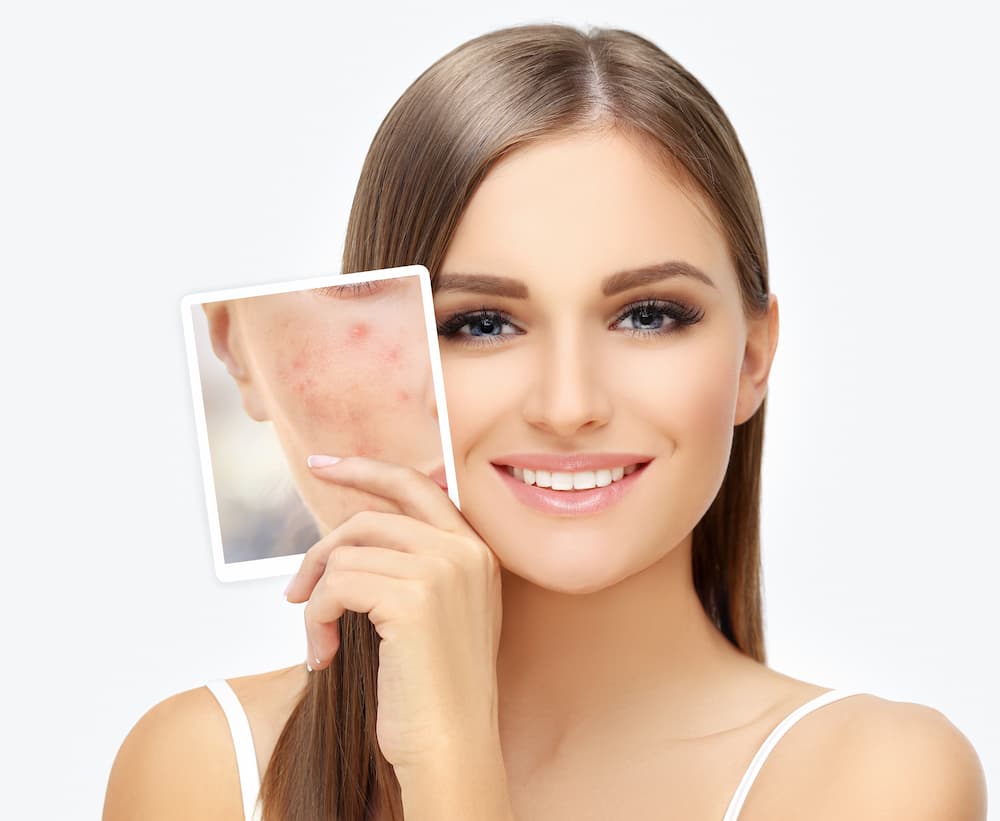
Acne scars are not harmful to your health, but they can affect how you feel about yourself. For many, managing them can be a long-term challenge. Fortunately, new treatments can help fade deeper scars and even remove lighter ones.
Laser therapy and RF microneedling are two of the most effective ways to treat acne scars. Using advanced technology and the right mix of treatments can lead to great results.
Identifying Your Scar Type
The type of treatment the cosmetologist suggests depends on the structure of your acne scar. The common types are atrophic, hypertrophic, and keloid. Atrophic scars are flat and shallow depressions that happen when the tissue heals beneath the surface. Their most common cause is severe cystic acne. The types of atrophic scars are:
- Boxlike scars: Box-type (U-shaped) depressions that have well-defined edges.
- Ice pick scars: Narrow V-shaped indentations that seem to point inside the skin's surface.
- Rolling scars: Wave-like scars that make your skin look uneven.
Hypertrophic and keloid scars create raised lumps of scar tissue in the spots where acne used to be. The former remains the same size as the previous acne, while the latter grows beyond the acne spot boundaries.
Primary Treatment: Laser Resurfacing
Laser resurfacing uses heat to help your skin renew itself. The laser warms the deeper layers of skin, which starts the body’s natural healing process. This leads to new collagen growth and smoother skin.
Depending on the type and severity of the scar, the dermatologist can suggest using different types of lasers.
Ablative Lasers (CO₂)
Ablative lasers remove the top layer of skin and part of the layer underneath. They physically take away scarred tissue and are especially effective for deeper atrophic scars, like box-type or rolling scars, because they can make a big difference in skin texture.
However, ablative laser treatments come with significant downtime (often one to two weeks). They also carry higher risks of side effects, including peeling and pigment change.
Non-Ablative Lasers (Fractional Non-Ablative)
Non-ablative and fractional non-ablative lasers send heat into the deeper layers of your skin but leave the surface mostly untouched. They create tiny channels that help your skin produce new collagen from below.
These treatments are good for moderate atrophic scars and usually don’t require much recovery time.
Vascular Lasers
Vascular lasers focus on blood vessels that cause redness or discoloration. They are helpful for redness from new acne scars, sun damage, and rosacea. This treatment also boosts collagen and does not require any recovery time.
Collagen Induction Therapy
Collagen induction therapy treats scars by gently injuring the skin to trigger its natural repair process. There are a few types of this therapy:
Standard Microneedling
Microneedling uses tiny needles to make small injuries in the skin. These small injuries start the body’s natural healing process:
- Release of growth factors
- Activation of fibroblasts
- Deposition of new collagen
Standard microneedling is gentler than laser resurfacing. It is a good option for shallow scars and uneven skin texture.
Radiofrequency (RF) Microneedling
RF microneedling for acne sends radiofrequency energy into the deeper skin layers. This adds heat to the process, which boosts collagen production even more than standard microneedling. As a result, it often works well for more severe atrophic scars.
The Power of Combination Therapy
Since no single treatment works for every scar, the best results often come from combining different acne scar treatments. Your cosmetologist will also think about your skin type, how much recovery time you can handle, and your appearance goals.
Examples of such therapies are:
- Subcision (to release tethered rolling scars) followed by fillers (to elevate depressed areas).
- A " TCA Cross" (for narrow ice-pick scars), then fractional laser for broader texture improvement.
- In-office chemical peels post-laser to enhance tone and refine results.
These combinations can help improve outcomes while minimizing downtime.
Schedule your detailed consultation with Radiant Dermatology
You don’t have to live with acne scars forever. An experienced cosmetologist with the right tools can help you get great results.
At Radiant Dermatology, we use the latest techniques and advanced equipment to treat acne scars. Book a consultation with our team today to learn more.
Image Credit: LADO // Shutterstock


.png)

.png)


